
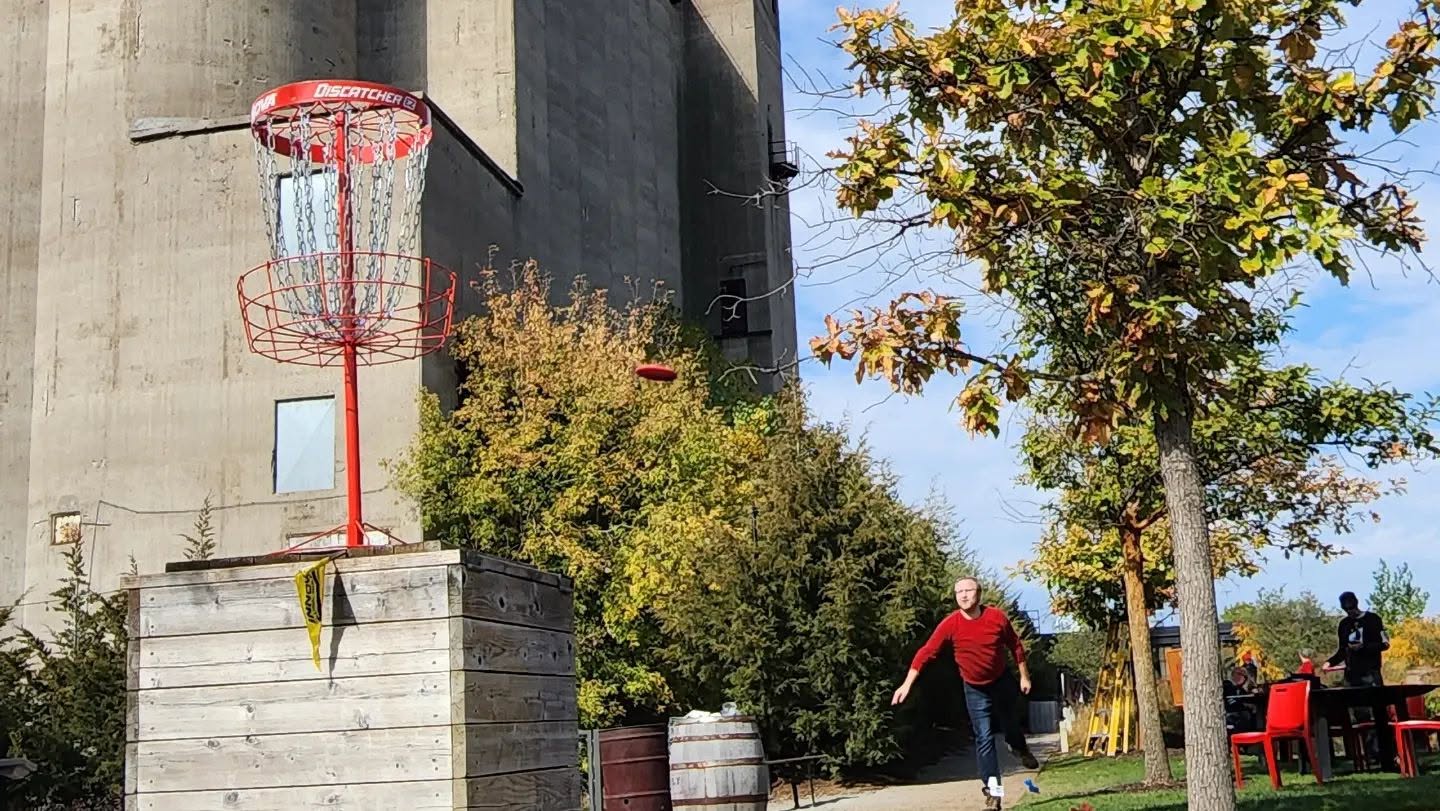
A putting league brings people together to play the short game of disc golf. Instead of driving down a fairway, you throw putters toward a basket from designated spots, keep score, and see how your round stacks up.
If you live in Minneapolis, St. Paul, or the surrounding Twin Cities area, this guide explains what to expect at a putting night and how to find an event that fits you. For Minnesota disc golfers, indoor winter putting also offers a way to keep playing and seeing friends when snow and ice make outdoor rounds more demanding.
It takes something you might practice alone and turns it into a social event. You get the satisfaction of making a tough putt, a little friendly competition, and time to meet other disc golfers between throws. Someone you meet at a putting night could become a friend you head out to the course with.
How does it work?
The basic idea is simple: take your putts, record your score, and move through the event’s format. The details depend on where you play.
Most KPLeagues putting leagues use a station-style format. You move through a series of putting stations, take your throws at each one, and record your score before moving on. Different stations give you different putts to work on, and the shared round gives you time to talk, cheer each other on, and get to know the people you are playing with.
You may also encounter match-play or doubles putting events, where you compete directly against an opponent or play with a partner. Those are other ways to organize putting, but station-style play is the main format you will find at KPLeagues putting nights.
Distances, the number of throws, scoring, and the way winners are decided can vary between events. Read the event information and ask about the rules before your first round.
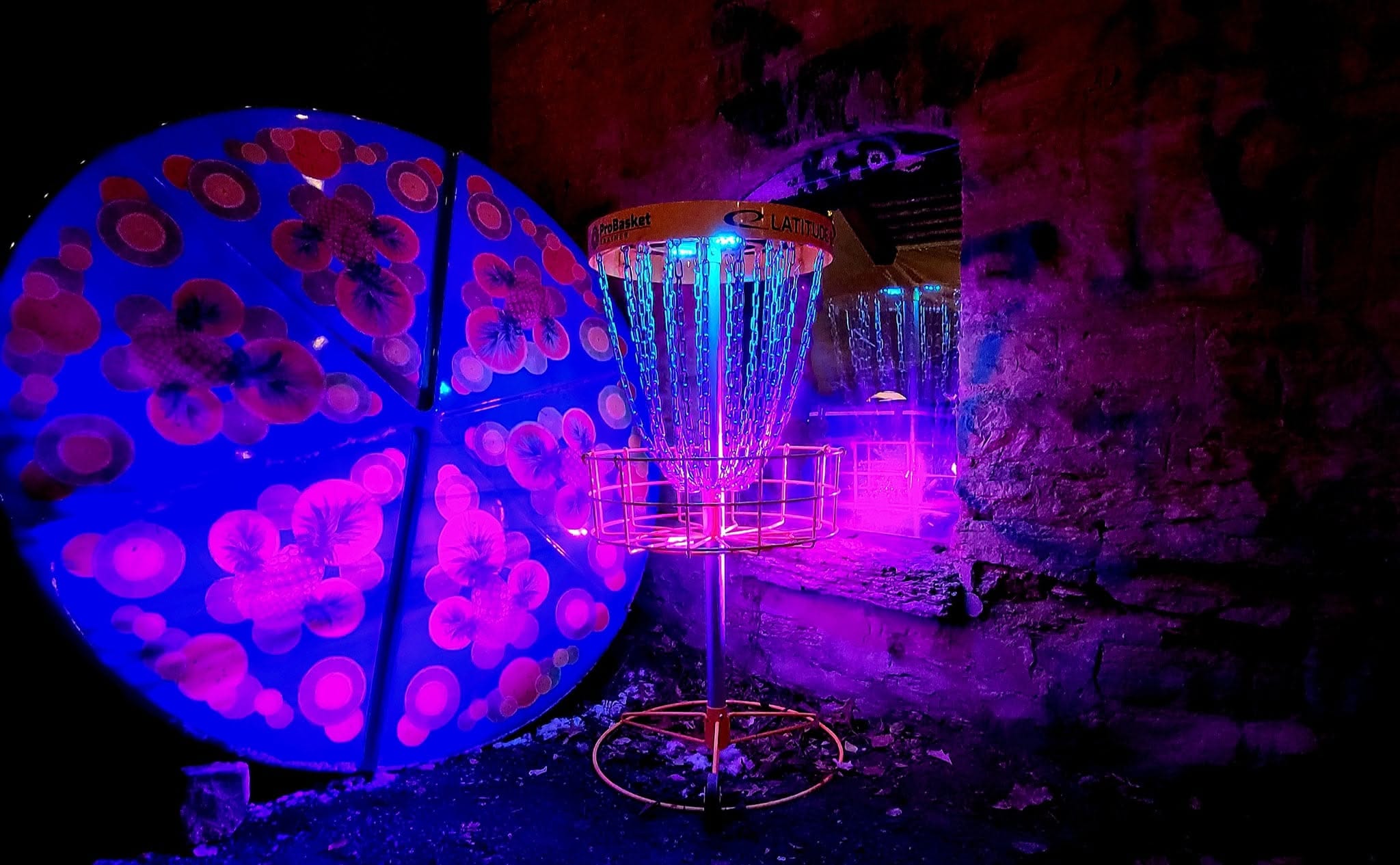
How scoring works
For the KPLeagues station-style course described here, a round covers 20 holes, with putting distances from 5 to 40 feet. Throw two putts at each hole, then enter your points on DGScores before moving to the next station. Check your event information for any changes to the course or scoring.
Each putt can earn points:
- Make: 2 points. A disc that comes to rest touching any part of the basket from the cage upward counts as a make.
- Splash: 1 point. Contact with the cage or anything above it earns a point when the disc does not finish as a make.
- Both putts made: 1 bonus point. Two makes give you four points plus the bonus, for 5 points on the hole.
A make and a splash add up to 3 points, while two splashes earn 2 points. Two makes earn the maximum 5 points, including the bonus.
A wall or another surface can be part of the adventure. There is no deduction for a bounce before reaching the basket: score the resulting make or splash the same way you would a direct putt.
Tees, jump putts and the sitting hole
Look for a single cone, flag or other object marking your tee. Use that marker as you would a mini, with your foot behind it. The teeing rectangle measures 20 centimeters across and 30 centimeters back, centered on the line of play immediately behind the marker’s rear edge.
For this course setup, Gold tees and the ace hole allow jump and step putts. Other tees do not. Check which tee you are playing before stepping through your throw, and follow any event-specific instructions.
Some weeks add a sitting-putt hole for a different challenge. Take a seat on the designated surface to throw those putts; it is a chance to see how your stroke works without your usual standing stance.
Indoor and outdoor putting
Putting events happen both indoors and outdoors. During a Minnesota winter, indoor putting gives you a comfortable place to hang out and keep playing without standing in the cold, trudging through snow, or dealing with icy footing.
You can work on your putting stroke, build a routine, and get scored practice while spending time with other disc golfers. Between turns, there is time to catch up with friends, meet new players, and talk about your next round. It is a way to keep working on your game and enjoy the social side of disc golf through the winter, even when an outdoor round is less inviting.
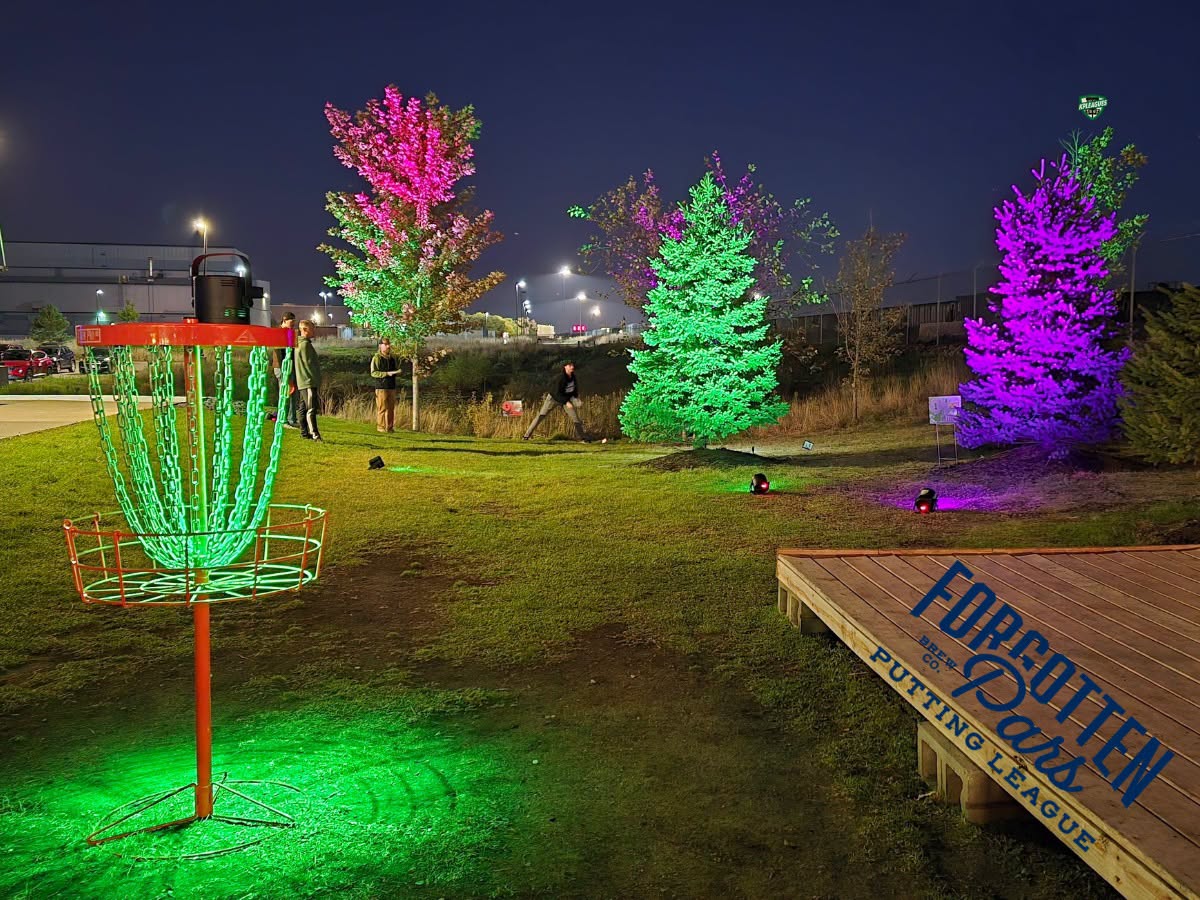
Outdoor events bring the putting stations into the open air, where wind and weather can add to the challenge. Check the event listing for the actual playing area and dress accordingly. An event at a brewery or another indoor venue does not necessarily mean the putting itself is indoors.
Do I need to be good at putting?
You do not need a perfect putting stroke to be interested in a putting night. Learning to handle a short putt with someone keeping score is part of the experience. So is missing one, laughing about it, and getting another chance at the next station.
If you are new, tell the organizer. Ask how scoring works, which division fits your experience, and where to start. Entry requirements and available divisions are specific to each event, so check those details rather than assuming every putting night works the same way.
What should I bring?
Start with the event listing. Check how many putters you need, whether loaners are available, and whether play is indoors or outdoors. Dress for the actual playing area, and bring a phone if the event uses online scoring.
You can bring friends or come on your own. If you are arriving solo, ask the organizer how groups are formed and let them know you would like to meet people to play with.
Before leaving home, check the current start time or arrival window, entry fee, registration instructions, and any venue requirements. A venue’s regular business hours are not necessarily the putting event’s hours.
Does “league” mean I have to play every week?
Ask about the specific event, but do not let the word “league” make you assume a season-long commitment.
Check whether you can drop in for a single night, whether membership is required, and whether there are separate requirements for season standings or a championship. Joining an ordinary putting night and qualifying for a championship can be different things.
Meet people you will want to play with again
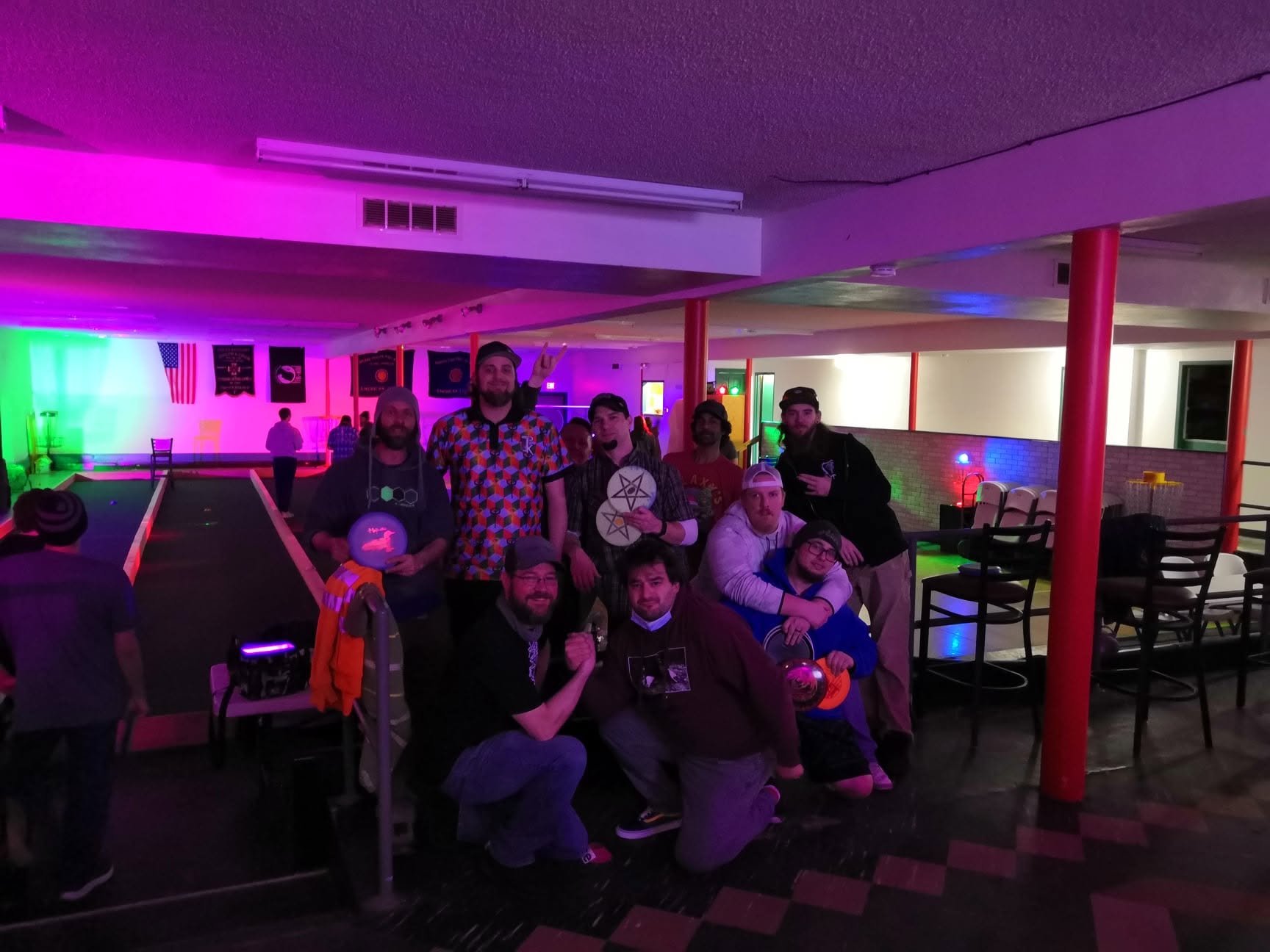
The social side is a big part of a putting night. Between stations and turns, there is room to learn names, compare favorite courses, celebrate a good putt, and laugh off a miss. You have something in common before the conversation even starts.
Coming back gives you familiar faces to look forward to, but you can start making connections on your first visit. A conversation about a local course can turn into plans for a weekend round. Putting events are a way to find people to play disc golf with beyond the putting night itself.
Why give it a try?
Putting gives you plenty to work on: choosing a line, finding a comfortable routine, and following through when a putt matters. A putting event gives those repetitions a score and a group of people to share them with.
You might come to sharpen your game, spend time with friends, or meet people to play disc golf with. You can enjoy the competition without making a whole season your goal.
Find your first putting night
Visit the Putting format page to learn about the format and find a putting night that fits your schedule. Open its event page, review the format and registration details, and ask us if something is unclear.
Looking for putting near Minneapolis or St. Paul? Check the venue address on each event page and explore options around the Twin Cities, including nearby suburbs. Choose an indoor winter night or an outdoor putting event, bring your putters, and come meet a few people. Your next group for a round on the course might start here.